Top Pro Roofing SD is a referral marketplace. We connect San Diego County homeowners with CSLB-licensed C-39 roofers. We do not remediate mold, we do not open walls, and we do not certify indoor air. Call (760) 750-5557. You pay the roofer for the roof. Mold cleanup is a different licensed trade when the material is soaked.
Yes. A roof leak can cause mold, and it can start faster than the stain looks. Mold can begin within 24 to 48 hours on wet drywall, insulation, or framing that stays damp. Visible colonies often take days to a couple of weeks. The leak is the water source. The danger is trapped moisture in dark cavities. Stop the water, dry the assembly, then repair the entry. Cleaning first while it is still raining into the bay just restarts the clock.
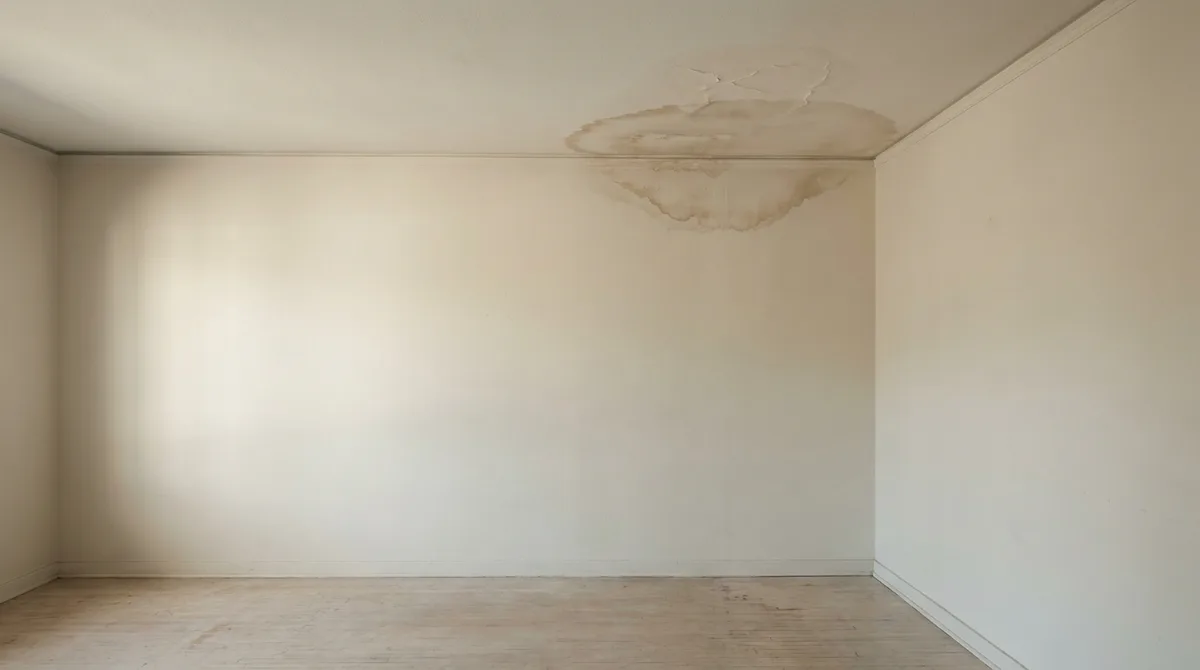
How fast mold grows after a roof leak
Mold wants moisture, an organic surface, and time. Drywall paper, wood, and cellulose in attic insulation are food. A leak supplies water. Spores are already in house air. They stay quiet while surfaces are dry.
| Time since the leak stays wet | What is happening | What you may notice |
|---|---|---|
| 0 to 24 hours | Materials take on water, spores activate | Damp smell, soft or discolored drywall |
| 24 to 48 hours | Growth starts on wet surfaces | Faint musty odor, a spreading stain |
| 3 to 12 days | Colonies spread | Fuzzy or dotted patches, stronger smell |
| 2+ weeks of steady moisture | Growth into wood and cavities | Dark staining, warped materials |
A one-time drip that dries fast may never colonize. A slow leak that keeps insulation damp for a week almost always does. Roof leaks hide in attics and wall cavities. The ceiling stain can be late.
Why a dry metro still gets this
Mold does not need a wet climate outside. It needs a wet cavity. A leak makes one.
Coastal La Jolla, Del Mar, Encinitas, and Pacific Beach sit in marine-layer humidity. Wet attics dry slowly. Inland El Cajon, Santee, and Escondido bake the attic air, but soaked batts between joists stay dark and wet. Heat does not reach that.
San Diego leaks are often quiet: failed tile underlayment, cracked flashing, a boot that only weeps in a long rain. By the time a ceiling stain shows, the attic above may have been damp for a while.
Signs the leak already grew something
You often smell it before you see colonies.
- Musty odor stronger in one room or closet
- Stains that spread or return after paint
- Soft, bubbled drywall or a dark ring at the edge of a water mark
- Allergy-like symptoms that ease when you leave and return indoors
If the attic is safe, look at the underside of the deck and the top of the insulation below the stain. Black, green, or white patches on wood, or matted discolored insulation, mean moisture has been there long enough. Mold usually sits uphill of the interior mark, closer to the entry. Find the source of a roof leak.
Order of work: water first, then dry, then roof, then mold trade
- Stop the water. Contain drips. Tarp if the storm is still feeding the room. Active leak response.
- Dry. Fans, a dehumidifier if you have one, pull saturated insulation only if you can reach it safely. Faster dry means less growth.
- Size the interior problem. A small patch on a hard, non-porous surface after the leak is dead and the area is dry can be a homeowner cleanup. Mold in drywall, wood, or insulation, or a large area, needs a remediation contractor. The material often has to come out. Minor vs major roof leak.
- Fix the roof. A C-39 confirms the entry (often feet from the stain) and repairs it. Roofers in the network handle roof leak repair. They are not automatically the mold crew.
Do not treat a roofer quote as a mold clearance. Do not treat a mold company as a roof diagnosis.
Insurance: sudden accidental water is a different conversation than a worn roof. Mold limits, if any, live in your policy and in California Department of Insurance consumer material. Read those. Homeowners insurance and roof leaks in California.
Frequently asked questions
How long does it take for mold to grow after a roof leak?
Growth can begin within 24 to 48 hours on materials that stay wet. Visible patches often take days to two weeks. How long it stays wet is the main variable.
Does a small roof leak cause mold?
It can. Slow hidden drips keep one spot damp, which is what colonies want. Large obvious leaks get noticed and dried faster.
How do I know if a roof leak caused mold?
Musty odor in one area, a spreading stain, soft drywall. In a safe attic, look at deck and insulation uphill of the stain.
Does homeowners insurance cover mold from a roof leak in California?
It depends on cause, policy language, and caps. Sudden damage is more likely to get a hearing than deferred maintenance. Read the mold endorsement. California leak coverage.
Can I remove roof leak mold myself?
Sometimes, on a small hard-surface patch after the leak is fixed and dry. Soaked drywall, insulation, or wood, or a large area, belongs with a remediator. When unsure, get it looked at before it spreads.
When to call
A stain, a musty smell, or a leak that returns needs the roof and the attic read together. A roof inspection is how a C-39 traces the entry and tells you whether the deck and insulation are a roofing scope or also a remediation scope.
Call (760) 750-5557 to be connected with a licensed independent local roofer.