Coronado takes the hardest salt exposure in San Diego County. It’s an island, so every property is within reach of bay or ocean spray, and that single fact changes almost every material and flashing decision on a Coronado roof. Add historic Village homes, luxury Cays properties, and design review that varies block by block, and you get a cost picture that looks nothing like an inland estimate. Here’s the real 2026 breakdown. For our full Coronado roof replacement service details, see the main page.
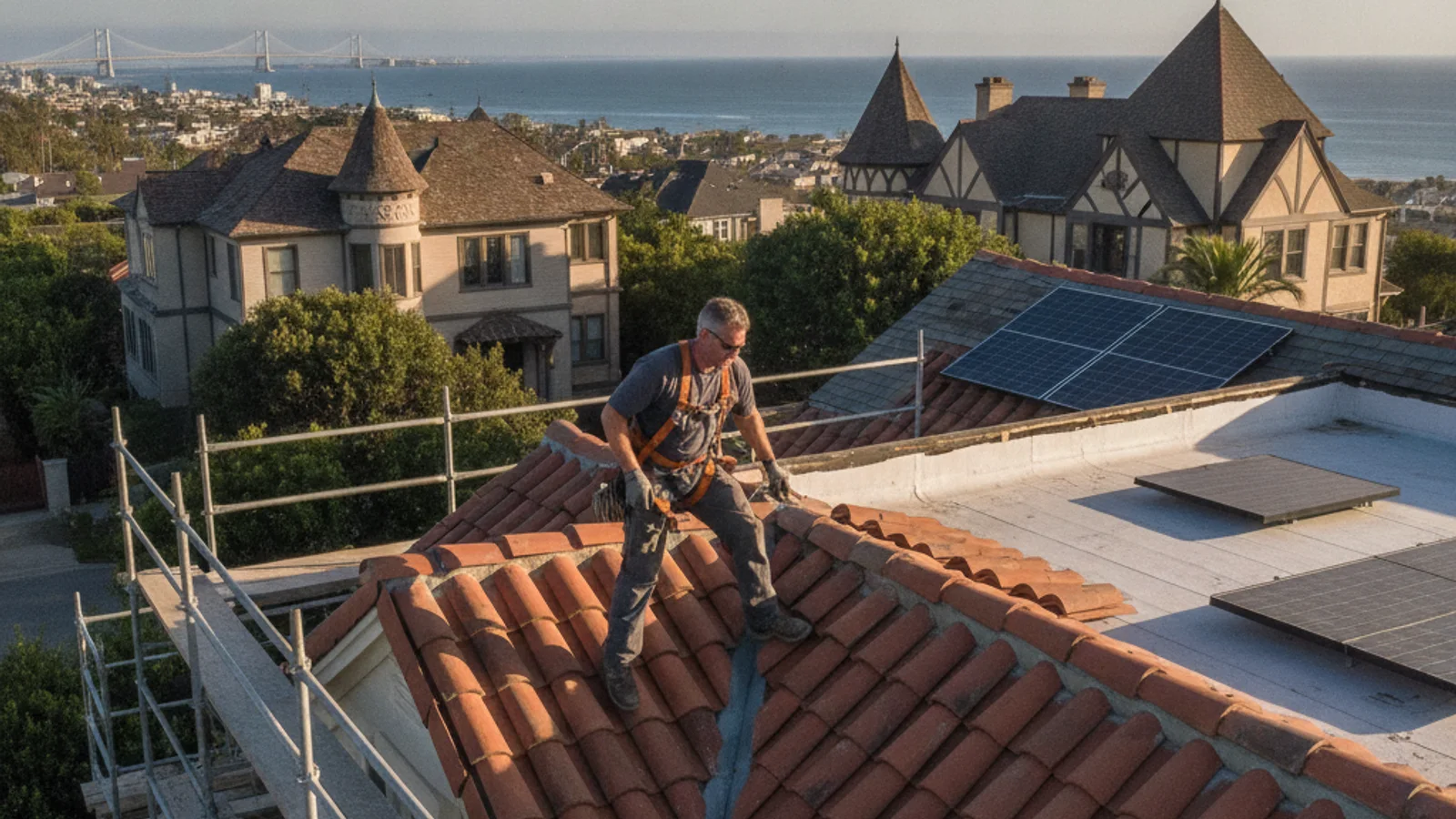
What a Coronado roof costs by material in 2026
- Architectural asphalt shingle: $5.50 to $9.00 per sq ft installed, the working spec for Craftsman-era Village homes when the architecture calls for shingle rather than tile.
- Concrete tile: $10.00 to $18.00 per sq ft, standard on the Spanish revival homes throughout the Village and the newer Cays tract.
- Standing seam metal: $14.00 to $25.00 per sq ft, frequently specified in copper-tone finishes on higher-end Crown Manor and estate properties.
- Flat or low-slope TPO: $8.00 to $12.00 per sq ft, used on additions and smaller flat sections.
Every one of these numbers runs toward the top of its range in Coronado, because salt-grade fasteners, stainless or lead flashing, and marine-rated underlayment aren’t optional here the way they might be five miles inland. We never spec galvanized flashing anywhere in the Coronado service area. See coastal roof salt damage data for why that matters over a 20-year roof life.
Why every Coronado roof needs salt-grade specification
Tear-off adds $1.00 to $2.00 per sq ft over an overlay, but overlay is rarely the right call on Coronado anyway, since most reroofs here are also an opportunity to upgrade flashing and fastener grade before the next storm season. Select high-end Village properties specify premium synthetic slate to match original Victorian rooflines, which runs a further premium above standard tile pricing depending on the profile and color match required. Our best roof material for coastal climates guide covers how to weigh salt resistance against upfront cost across material types.
Annual flashing inspection is standard maintenance here in a way it simply isn’t in inland San Diego. Salt air degrades exposed metal faster than sun or rain alone, and a flashing failure on Coronado tends to show up years before the shingle or tile field itself is due for replacement. Homeowners who skip that annual check often end up paying for water intrusion repair that a $200 inspection would have caught. Our roof inspection checklist covers what a proper coastal inspection should include.
Historic district review in the Village
A meaningful share of Village work involves preservation-grade coordination, matching original ridge caps, exposed rafter tails, and cedar shake patterns where present, plus historic district documentation for properties that require it. We work directly with the Coronado Historical Association and city historic preservation review on these projects. That review process doesn’t usually add to the direct project cost, but it does add time, so we build realistic timelines into every Village bid rather than promising a fast turnaround we can’t back up.
Not every Coronado property sits inside a designated historic zone, and it matters which side of that line your home falls on. Newer construction in the Cays and around Crown Manor generally clears standard city review without the added historic documentation step, which keeps those timelines closer to what you’d see in a non-historic coastal city. We check a property’s historic status before quoting so the timeline we give you is the real one, not a generic estimate that assumes the easiest case.
Permit costs and the Coronado timeline
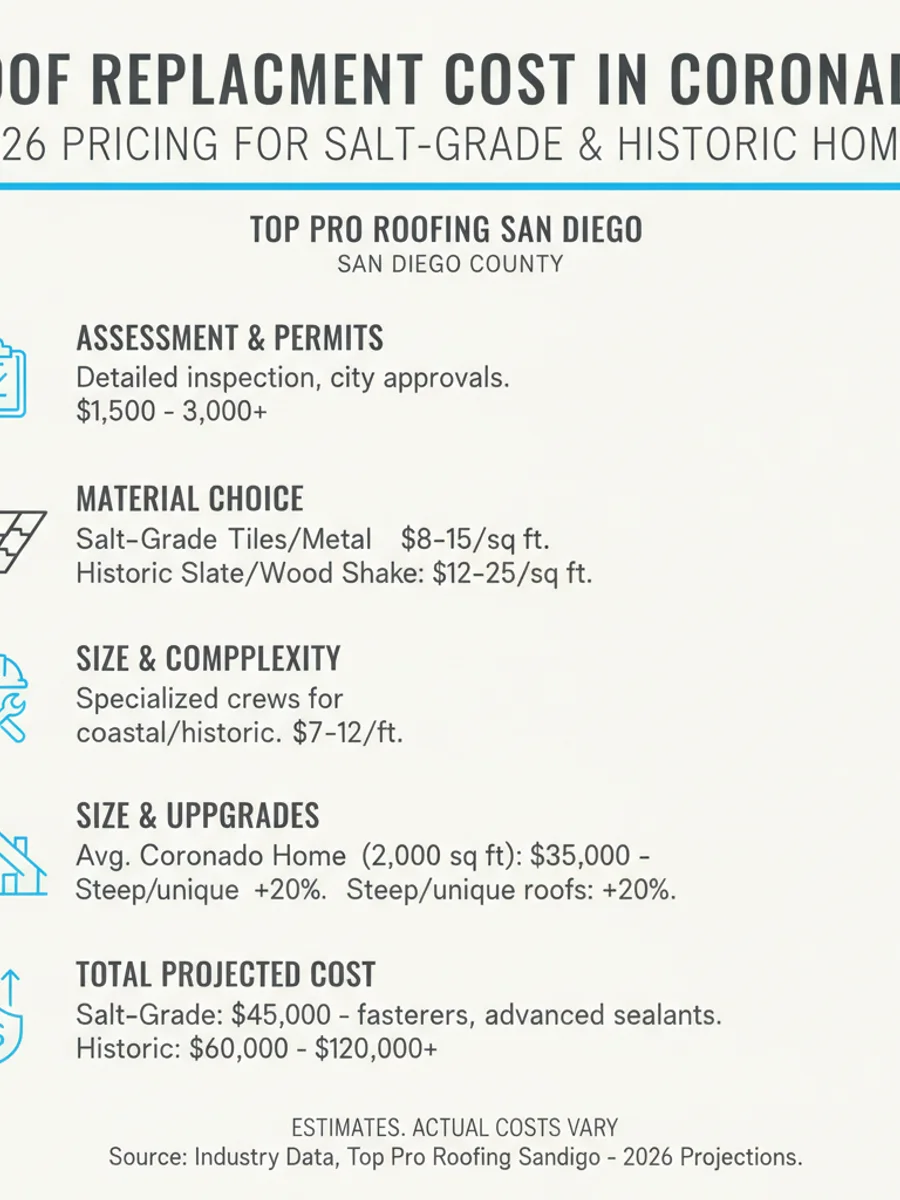
Reroof permits go through the City of Coronado building division. Budget $500 to $900 depending on scope, with the higher end typical for estate properties or anything requiring historic preservation sign-off. Historic district review can add several weeks beyond a standard permit timeline, so Village homeowners should plan further ahead than a Cays or non-historic property owner would need to. Our roof permit process guide covers what to expect at each stage.
Real Coronado bid examples
- Village Craftsman bungalow, 1,800 sq ft roof, architectural shingle with stainless flashing: Preservation-grade detail work and permit brought the bid to $10,400 to $17,000.
- Coronado Cays tract home, 2,400 sq ft roof, concrete tile Spanish revival: With salt-grade underlayment and permit, bids ran $24,500 to $44,000.
- Crown Manor estate, 3,200 sq ft roof, premium copper-tone standing seam metal: With historic-adjacent design review and permit, the bid landed between $45,500 and $81,000.
For county-wide material pricing across San Diego, see the San Diego roof replacement cost guide. If you’re comparing against another premium coastal market, our La Jolla cost breakdown covers similar salt-exposure factors on the mainland side.
When to call us
Coronado roofs need a contractor who specs correctly for salt exposure the first time, not after a flashing failure two winters in. We handle roof replacement and tile roofing with the salt-grade materials and historic coordination this island requires. Call us at (760) 750-5557 for a same-day estimate.