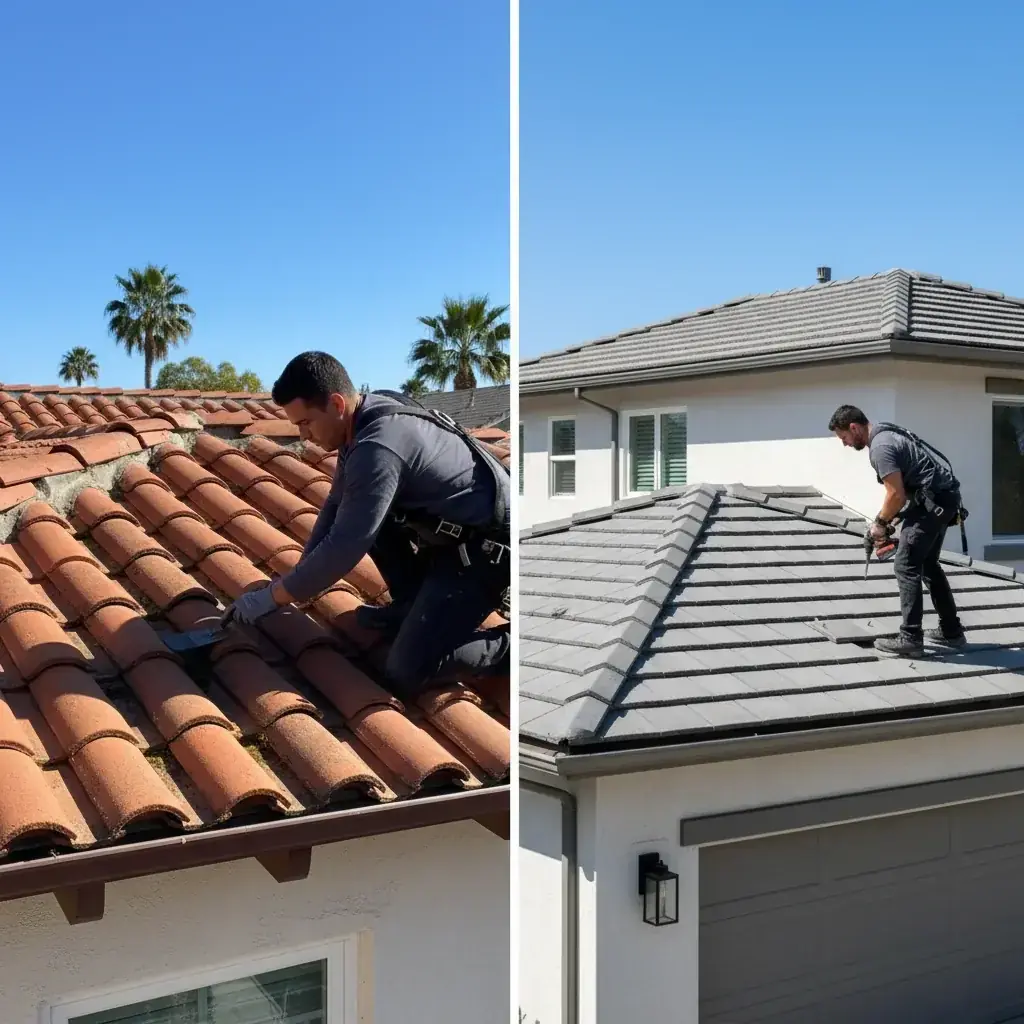
If you own in Scripps Ranch and a roof project is coming, the association layer is the part most people underestimate. The labor on the roof can be a short window. Design review is a different calendar. Do not lock a start date on a verbal “the neighbor did tile.”
Top Pro Roofing SD is a referral service. We connect homeowners with independent C-39 roofers. We do not sit on architectural committees, approve colors, or publish HOA fee or roof totals. Call (760) 750-5557.
The first document is always your CC&Rs and the current architectural guidelines for your sub-association. Neighbor rules do not transfer. 4S Ranch to the north and Mira Mesa to the west are different communities with different habits. This page is a field guide, not a substitute for the packet in your closing file.
The Scripps Ranch HOA landscape
Scripps Ranch is not one HOA. It is a master-planned area with multiple sub-associations. Community-wide issues may sit with a civic or master body. Roof appearance usually sits with the sub-association that governs your tract: Old Scripps Ranch, the Aviary, Stonebridge Estates, Miramar Ranch North, Sycamore Creek, Scripps Vista, and smaller pockets each have their own committee habits.
That matters because the rules vary. One tract may list concrete S-tile in a short earth-tone palette. The next may allow flat concrete tile with a sample. A third may speak to ridge caps, valley metal, or underlayment. We will not invent a countywide tile statute. Read the documents.
Mira Mesa to the west has more mixed coverings on many streets. 4S Ranch to the north is a later planned community with its own CC&Rs. Scripps Ranch sits between: older enough that sub-associations have quirks, established enough that many tracts still expect a tile look. Confirm, do not assume. Nearby process: Rancho Bernardo roofing guide. Tile tradeoffs: concrete vs clay tile.
The tile habit, specifically
Many Scripps Ranch sub-associations still expect tile on visible roofs. Asphalt shingle is often refused. Metal may need a variance. Concrete tile is common because original 1980s and 1990s specs used it and the CC&Rs preserved that look. None of that is universal until you read your CC&Rs. A looser older tract exists. Do not reroof in shingle because a blog said “almost every HOA.”
What “tile” means in the documents matters. Some allow concrete or clay. Some specify concrete. Some allow lightweight lookalikes with manufacturer cut sheets. Vague language means the committee decides each time.
If the existing field is concrete S-tile, replacing with the same profile and a close approved color is usually the shortest packet. Changing profile (flat on a house that was S-tile) is a longer argument.
Approved tile profiles (typical, not guaranteed)
Three profiles show up a lot. S-tile is the common look. Flat tile shows in later tracts and some custom houses. Two-piece mission barrel is uncommon and often extra review.
| Tile profile | How it often shows | What to do |
|---|---|---|
| Concrete S-tile (medium profile) | Dominant look on many streets | Check whether it is listed or needs a sample |
| Concrete flat tile | Later tracts, some custom | Often needs samples |
| Concrete shake or wood-look | Occasional | Often a variance |
| Mission / two-piece barrel | Rare, custom | Usually full committee review |
| Lightweight composite that mimics tile | Growing | Only if your guidelines and manufacturer docs match |
If you want a different profile than the house already wears, expect more scrutiny. Ask for the current approved list in writing.
Color
Color is where people get surprised. Many Scripps Ranch palettes are earth tones: weathered brown, terracotta, muted clay, sand, sage-leaning grays, blended ranges that sit with eucalyptus and chaparral. Pure black, bright red, “Mediterranean blue,” white, or a flat single tone often draws comments. Blended tiles are the usual look.
We will not invent a manufacturer “Scripps Ranch color line” or promise a listed Eagle, Westlake Royal (formerly Boral), or MCA SKU. Ask the association and the manufacturer’s representative for the current approved range. Bring physical samples to review, not only printouts. Sun on concrete is not a PDF. Roofs visible from the street or a neighbor’s yard get more color scrutiny than a tucked plane.
Design review: ask for the actual clock
Committees meet on their own calendar. Some meet monthly. Some less often. Submit the day after a meeting and you wait. We will not invent a four-to-eight-week guarantee or a ten-week worst case.
A typical packet includes:
- Manufacturer, product line, profile, and color
- Physical samples
- Photos of comparable installs
- Underlayment, flashing, fastening
- Contractor name, C-39, insurance when the association requires it
- Timeline and staging (dumpster, hours)
Ask management how they count completeness, how they handle incomplete packets, and whether lift-and-relay (same tile reset) still needs a courtesy filing. Do not schedule tear-off on a verbal yes. Written approval is the document that protects you.
Do not sign a start date before that letter exists. A bid that stays open while review runs is normal. We will not invent a 60- or 90-day bid hold. Get the expiration in writing.
Eucalyptus and fire history
Scripps Ranch is the eucalyptus neighborhood. Debris (leaves, bark, seed pods, branches) loads valleys and ridge caps. Oils around debris piles are hard on underlayment. Larger limbs crack tile in wind. That is a maintenance fact, not an HOA color rule.
The 2003 Cedar Fire is part of this community’s history. It does not let us state Chapter 7A or carrier rules for every parcel. The California Building Standards Commission publishes California Building Code Chapter 7A for wildland-urban interface construction. Read the current live text. Confirm with the City of San Diego as AHJ, OSFM, the HOA, and the insurer whether this parcel is in a designated area and what covering that path requires. Do not treat Class A as a countywide fact or Chapter 7A as automatic. Ember-aware vents and valley metal are inspection items, not a blog spec.
Re-roof versus lift and relay
A lot of original concrete tile here is still a sun shield. The weak layer is often the underlayment (felt or older synthetic) after decades of heat cycling. If tile is sound but you have leaks or attic staining, lift-and-relay (remove tile, new underlayment and flashing, reset sound tile) is the usual conversation. Full new tile is a different job: color, profile, and committee.
We will not invent a 30 percent broken-tile cutoff or a dollar spread between relay and new tile. If matching pieces are discontinued, salvage and a committee-approved blend become part of the packet. Detail: tile roof lift and relay.
Even when you reuse the same tile, some sub-associations still want notice. A short courtesy filing is cheaper than a stop-work letter. Check before the first tile comes off.
Cost realism without a fake total
Scripps Ranch lots and rooflines vary: single-story ranch, two-story, multiple hips and valleys, trees tight to the eaves. We will not invent living-area or roof-square ranges, HOA-premium tile upcharges, or lift-and-relay versus new-tile spreads.
Ask every bidder to separate:
- Packet and sample work
- Lift-and-relay versus new tile
- Broken-tile replacement and salvage
- Valley metal and ridge method (mortar versus mechanical)
- Staging limits the HOA actually wrote
Broader variables: tile roof cost in San Diego.
How to sequence the roofer and the HOA
The usual mistake is contracting the crew before the submission is drafted. Then the slot evaporates while you wait on a board.
A cleaner order:
- Get the current architectural guidelines and CC&R roof sections in writing. Read them.
- Get bids that include manufacturer specs, samples, and a line-by-line scope.
- Build the packet from those documents.
- Submit and pay the association’s actual review fee (whatever they charge; we will not invent it).
- After written approval, contract and lock a start.
- Handle City of San Diego permitting as a separate track.
City of San Diego permits are not the HOA letter
HOA approval and a building permit are separate. Scripps Ranch is in the City of San Diego. Start with Information Bulletin 123. Read the current bulletin. Do not treat “any reroof needs a permit” as the rule, and do not restate the bulletin’s numbers from this page. Ask the matched licensed C-39 and Development Services for this scope.
The inspector does not enforce CC&Rs. The association does not issue the city permit.
Common friction points
| What the documents often care about | Where jobs go sideways |
|---|---|
| Manufacturer color codes | ”Close enough” on the pallet, flagged at walkthrough |
| Ridge (mortar vs mechanical) | Crew default does not match the tract |
| Underlayment type | Association wants a wrapper photo; nobody saved it |
| Valley metal (open vs closed, color) | Default galvanized when the packet said painted |
| Dumpster and hours | Staging rules in the guidelines, not on the bid |
| Neighbor notice | Required by some sub-associations, skipped |
Ask for a written scope that mirrors the approved spec line for line. Photograph labels on underlayment and tile before they go on the roof. That is what closes the association’s inspection.
Verify any C-39 at the CSLB license lookup. If a contractor will not show license, bond, and workers’ compensation, move on.
Community hub: Scripps Ranch roofing. Tile service: tile roofing.
FAQ
Does every Scripps Ranch HOA require tile?
No. Many do. Some older tracts are looser. Asphalt shingle is often refused where tile is written in. Confirm CC&Rs for your APN. Do not copy the house across the canyon.
How long does HOA approval take?
Ask your management company. We will not invent four-to-eight weeks. Incomplete packets bounce. Sample requests add a cycle. Plan the start date after the written letter, not before.
Can I use lightweight composite tile?
Only if your guidelines allow it and the product is documented as a visual match. Neighbor-tract approval does not transfer.
What if my tile color is no longer made?
Common on 30-plus-year fields. Options the committee may accept: an approved blend, salvage pieces for a relay, or a full-roof new color on the current list. For relay, matching the pieces that break during the lift is the hard part. Ask the C-39 how they source discontinued profiles.
Do I need a city permit if the HOA already approved?
Maybe. They are different agencies. Read the current IB 123 and the actual scope. Ask the matched C-39 which path this job is on.
What happens if I do the work without HOA approval?
Associations can issue violation notices and require correction, including removal and redo, under the CC&Rs. That is why the packet exists. We will not invent a fine schedule.
Can I file before I pick a roofer?
Some committees will review color and profile first. Many still want contractor name, license, and insurance before a final letter. You can run design review and contractor selection in parallel. Ask which documents they need for which stamp.
The bottom line
Scripps Ranch roof rules are strict where the CC&Rs are strict, and they are tract-specific. Tile is common. Palettes are often narrow. Review takes as long as that committee actually takes. None of that is a reason to skip the documents.
Treat the HOA submission as a real deliverable. Get specs right. Get physical samples. Get written approval before the first tile moves. Then the roofing work is the part the C-39 already knows how to do.
Call (760) 750-5557 or request a quote. We match you with a licensed independent roofer who can build the packet from your actual guidelines. Top Pro Roofing SD does not perform the work or vote on your color.