Top Pro Roofing SD is a referral marketplace. We connect San Diego County homeowners with CSLB-licensed C-39 roofers. We do not paint roofs and we do not publish a county coating price. Call (760) 750-5557.
Fading, uneven color, or a dull surface can start a repainting conversation. Those changes do not decide whether metal roof paint is the right next step. The decision should follow a close inspection and a review of exact product documents.
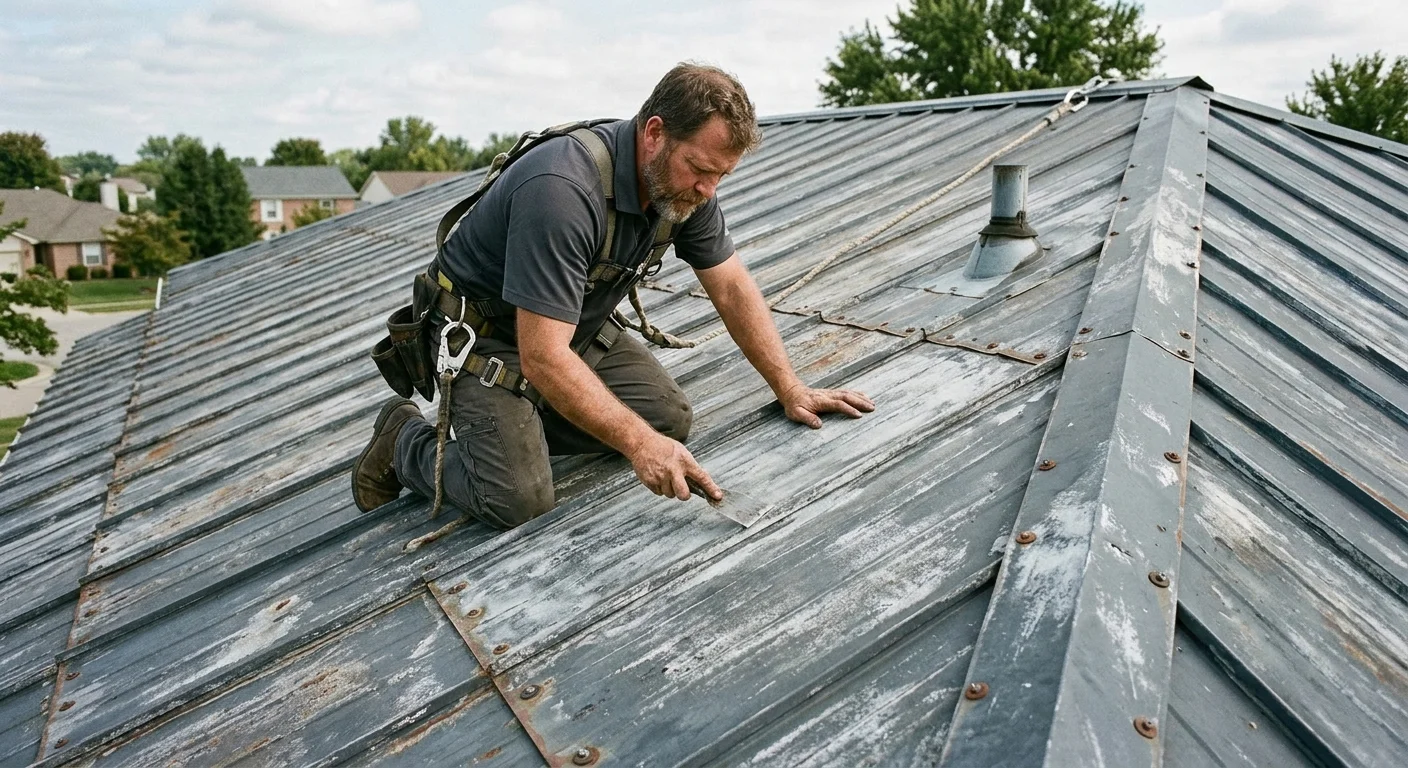
What changed appearance can and can’t prove
A changed finish tells you what the roof looks like today. It does not establish why the change happened or what work should follow. A distant photo can also leave important details unresolved.
Start by describing only what you can see. Note whether the change looks uniform or limited to certain panels. Record whether it appears near edges, fasteners, penetrations, or earlier repairs. Dated photos can help a roofer compare different roof areas without turning an observation into a diagnosis.
Don’t label every light patch as fading. Don’t call every mark corrosion. Residue, surface wear, exposed material, and coating failure aren’t interchangeable findings. A licensed roofer should identify what can be confirmed and mark anything that remains unknown.
The owner should also explain the goal. Restoring a preferred color isn’t the same request as investigating a leak or damaged roof detail. If you’re still choosing a finish for a new system, read our guide to choosing metal roof colors. This page addresses an existing roof whose appearance has already changed.
No universal visual threshold for repainting appears in our approved sources. That means a certain amount of fading can’t be used as an automatic deadline. The same is true for a particular shade change or number of affected panels.
Ask the roofer for a written condition summary. It should separate confirmed observations, recommended work, and unresolved questions. That record gives you a better starting point than a simple statement that the roof “needs paint.”
How a roofer checks the panels before discussing paint
The coating conversation should begin with the roof itself. California’s C-39 roofing classification covers metal roofing systems. Homeowners can confirm an individual contractor’s current status through the CSLB license lookup.
Ask the roofer to document the panels and the details around them. The inspection notes should identify where the finish has changed. They should also address seams, edges, fasteners, penetrations, flashing, transitions, and visible prior work. Photos should correspond with the written findings.
The roofer should then separate appearance concerns from repair concerns. If a leak, displaced component, or damaged detail is suspected, that issue needs its own finding and proposed scope. Our roof repair referral service can connect you with an independent local pro who evaluates that work.
A useful inspection record answers practical questions:
- Which roof areas were examined?
- What conditions were directly observed?
- Which materials or existing products were identified?
- How was that identification made?
- Are any areas inaccessible or still uncertain?
- Does the roofer recommend repair, coating work, further identification, or no work?
Those answers matter because this article can’t confirm product compatibility for an unidentified roof. It also can’t set preparation rules for every metal panel and finish combination. Those decisions need the existing system, proposed product, and current manufacturer documents.
Ask for the findings before accepting a paint proposal. If the proposal jumps directly to a product without identifying the roof condition, request the missing inspection details. A coating choice shouldn’t substitute for a documented roof assessment.
Why coating condition and roof details matter
A roof isn’t one uninterrupted painted surface. The proposal must account for what the roofer finds across individual areas and details. A broad note such as “coat metal roof” doesn’t explain how those areas were evaluated.
Request a simple roof map or marked photos. The record should show where the finish looks intact, where it has changed, and where the contractor found a separate concern. It should identify penetrations, edges, fasteners, seams, flashing, and previous repair areas included in the proposed work.
Existing colored metal roofing also needs positive identification where possible. Color alone doesn’t establish the panel material, earlier finish, or products previously applied. Ask which facts came from labels, owner records, earlier invoices, visible markings, or manufacturer confirmation. Unknown items should remain marked as unknown.
San Diego County’s microclimates also make a single countywide repainting timetable unreliable. Confirm current climate normals on NOAA’s published tables if you need a number. Individual years vary, and coastal areas often receive different rainfall than inland valleys and mountain areas.
Those broad climate facts don’t diagnose a specific coating. A coastal North County property and an inland property still need roof-specific findings. For coastal concerns, our guide to salt exposure and metal roofs explains the separate questions an owner should raise.
If inspection points toward a larger metal roofing decision, review the available metal roofing service before comparing contractors. Top Pro Roofing SD makes referrals. The independent roofer inspects the roof, proposes the scope, performs accepted work, and answers for any terms in that contract.
What surface preparation belongs in the proposal
Surface preparation shouldn’t appear as a vague allowance. The proposal should identify the exact preparation planned for the observed roof. It should also name the document supporting those steps.
This article can’t prescribe universal washing, abrasion, primer, rust treatment, or application conditions. Those rules weren’t confirmed for every metal roof paint or existing finish. The correct process depends on information that must come from the roof inspection and the proposed product’s current documentation.
Ask the contractor to address these items in writing:
- The panels and roof details included in the scope
- The existing surface or finish, if positively identified
- Areas that need separate repair before coating is discussed
- The exact proposed product and each included component
- Manufacturer documents used to select the preparation
- Preparation steps assigned to each observed condition
- Areas excluded from the proposal and the reason
- Conditions that would pause work or change the scope
- The method used to document completed preparation
- Cleanup, access, and protection responsibilities
This isn’t a request for DIY application instructions. It’s a way to compare professional proposals using the same questions. One bid may include an item another contractor has excluded or left undefined.
No verified San Diego County price for repainting an existing metal roof appears in the approved claims ledger. We can’t publish a blanket rate, price per square foot, or expected total. Request written proposals from licensed roofers and compare their stated scopes.
If a contractor finds repair needs, ask for those items separately. That makes it easier to see what addresses the roof condition and what addresses appearance. It also helps prevent a broad “roof paint” line item from hiding unanswered questions about panels and details.
What product documents should settle the decision
The final decision should name a product, not just a coating category. Ask for the current manufacturer documents tied to that exact product. Depending on what the manufacturer publishes, those may include a technical data sheet, product label, application instructions, safety document, and written warranty terms.
Read those documents beside the proposal. Confirm that the product name and version match. Ask the roofer to point out where the manufacturer addresses the identified roof surface, preparation, primer, application conditions, and related components. If the existing finish remains unknown, ask how the manufacturer was consulted about that gap.
Don’t accept an unwritten compatibility claim. Product compatibility isn’t confirmed in this site’s approved claims ledger. It must be checked against current manufacturer information for the specific products involved.
Treat performance and durability statements the same way. We don’t have an approved universal lifespan for metal roof paint or coating. Ask for the manufacturer’s written language, including its conditions and exclusions. If a warranty is offered, get the actual document. Top Pro Roofing SD doesn’t provide warranties or set a contractor’s warranty terms.
Energy claims need product-specific support too. Look up the CEC climate zone for this address. Do not treat typical San Diego steep-slope work as a cool-roof default. We will not freeze aged-reflectance, emittance, or SRI cutoffs here.
Confirm the current rule for the address, roof slope, building type, and work scope with the California Energy Commission, the relevant local building department, and the licensed roofer.
When to call us
If the finish has changed and the underlying condition isn’t documented, bring in a licensed roofing pro before choosing a coating. Call us at (760) 750-5557 and we’ll connect you with a licensed local roofer.