Chula Vista roof repair is a neighborhood problem first and a bid second. West of I-805 you see older tile, bungalow flat roofs, and failed galvanized flashing. Eastlake, Otay Ranch, Rolling Hills Ranch, and Rancho del Rey show aging shingles, cracked concrete tile from foot traffic, and tired skylight seals. Top Pro Roofing SD matches homeowners with licensed independent roofers. We do not set prices, tarp roofs, or pull permits. Call (760) 750-5557.
If water is actively coming inside, contain it from below and stay off a wet roof. Then get a licensed C-39 on site. For everything else, get more than one written quote on the same scope.
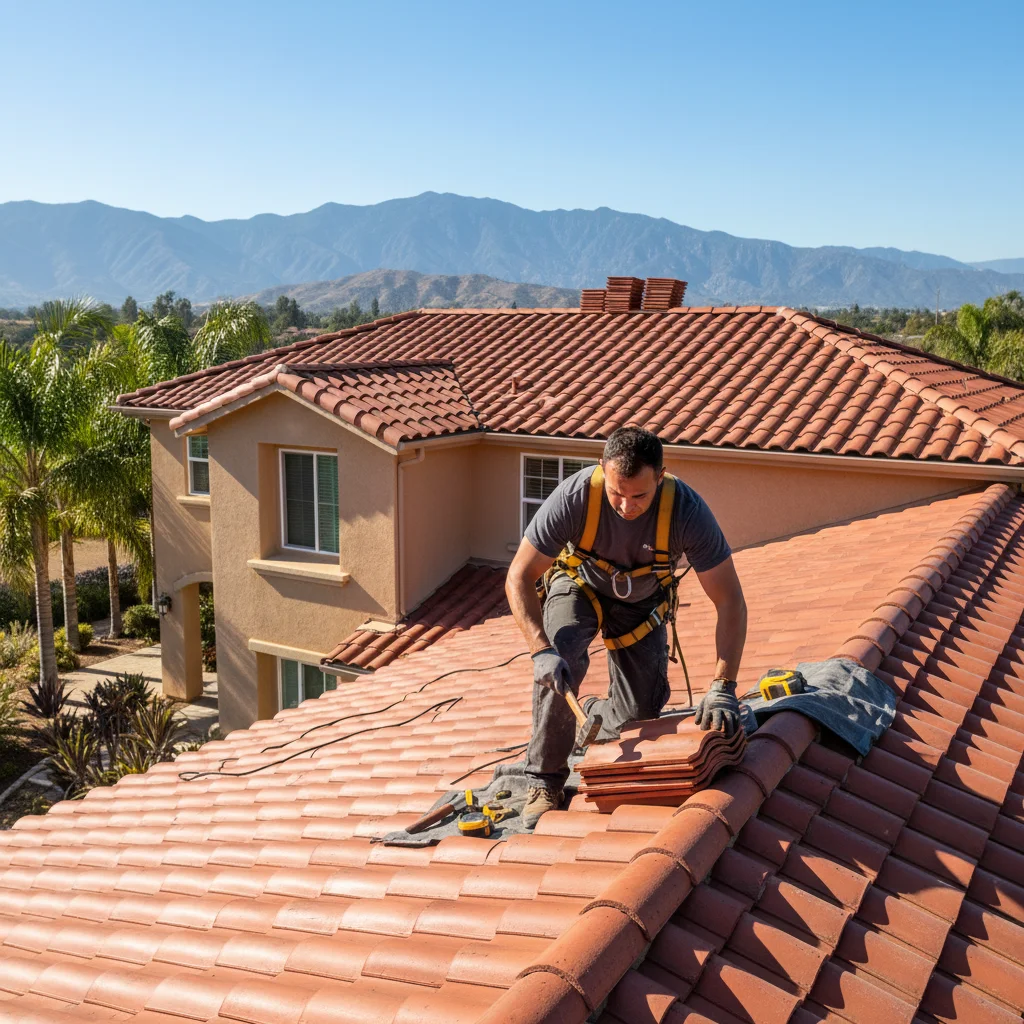
The most common roof problems in Chula Vista (by neighborhood)
Chula Vista behaves like two cities. West of I-805: bungalows, mid-century ranches, and older tract homes near Third Avenue, Castle Park, and the marina. East of the 805: master-planned Eastlake, Otay Ranch, Rolling Hills Ranch, and Rancho del Rey.
In the western neighborhoods, typical repair calls are:
- Tile slip on older barrel tile. Shorter original fastener schedules and tired wire ties let tiles migrate. The underlayment underneath is often the real leak path.
- Ponding on low-slope additions. Tar-and-gravel or older modified bitumen bakes, blisters, then cracks. Marine layer keeps the surface damp.
- Failed chimney, skylight, and sidewall flashing. Original galvanized metal rusts. Old mastic patches do not last.
In Eastlake, Otay Ranch, and Rolling Hills Ranch:
- Shingle granule loss and curling on tract roofs that are now at the end of a 3-tab or early architectural cycle.
- Concrete tile cracked by HVAC, solar, and satellite traffic. Hairline cracks dump water onto underlayment that is near end of life.
- Skylight seal failures over kitchens and stairwells on homes built in the late 1990s and 2000s.
If the house is older tile, ask about underlayment, not only the slipped piece. If it is late-1990s shingle or early Otay Ranch tile, ask remaining service life in writing.
Do not use a blog table as a Chula Vista price list
Access, pitch, matching tile, hidden deck rot, and whether the city requires a permit change the number more than the neighborhood name. We will not invent 2026 dollar ranges for tile slips, flashing, valleys, or tarps. Ask each bidder to itemize materials, labor, dump fees, and what happens if they open the deck and find rot.
For the repair-versus-replace fork, use roof repair vs replace as a decision checklist. For full-roof line items, see Chula Vista 2026 replacement cost. Those pages are still not a substitute for a property quote.

When repair makes sense vs. when to replace
Ask the roofer for three facts in writing: approximate roof age, remaining underlayment condition, and how much of the slope already shows wear.
Signs the conversation should move toward replacement:
- Several leak locations on the same slope
- Underlayment that is brittle, black, and crumbling
- Decking that feels soft underfoot
Signs it can still be a repair:
- Localized impact: a branch, a flashing failure, or installer-cracked tiles, with the rest of the field testing dry
- One component: a skylight, a chimney, or a single valley, with the rest sound
A percentage-of-replacement rule of thumb is not a code. It is a sales shortcut. Compare written remaining-life notes instead.
How to vet a Chula Vista roofer in 10 minutes
- C-39 on CSLB. Use the CSLB license lookup. Active status, matching business name, workers’ compensation status on the live record, bond information readable. CSLB administers the current workers’ compensation filing rules for licensed contractors. Read the live CSLB and LegInfo text rather than this page. Read the current live text. Do not take this page as a restated C-39 workers’ compensation duty.
- Certificate of insurance from the carrier or broker, with you as certificate holder. A PDF the salesperson emails is not proof.
- Recent South Bay addresses with the same roof type. Drive by. Encinitas photos are not Chula Vista proof.
- Workmanship terms in writing. Manufacturer material terms are separate. Verbal warranties do not exist.
- Permit responsibility named. Confirm with the city for your scope. “We never pull permits for repairs” is a flag, not a savings plan.
- Deposit inside the legal cap. The Contractors State License Board publishes current home-improvement contract deposit rules. Read the live CSLB and LegInfo text. This page will not restate the cap. Read the current live text. This page will not restate the dollar cap.
Friction on license or insurance is enough reason to stop.
Emergency leak vs. a scheduled repair
Active water in the house is urgent containment, then a licensed roofer. A stain that is dry with a dry forecast can wait for business hours. We do not publish after-hours premiums or same-day promises. Ask the contractor when they can actually be on site.
| Situation | What to do |
|---|---|
| Active drip during rain | Bucket, photos, stay off the roof, call a licensed roofer |
| Growing interior stain | Photos, interior containment, ask about a secured tarp |
| Tiles or shingles on the ground after wind | Photos for insurance, then a written inspection |
| Small leak, dry forecast | Schedule a non-emergency inspection |
| Damage with no interior leak | Two written quotes, no door-knock deposit |
Interior steps: emergency roof repair. Tarp safety: emergency tarp. Do not walk a wet roof to save a wait.
Chula Vista permit notes
Do not copy a square-footage trigger from another city and treat it as Chula Vista law. Chula Vista Development Services publishes the current permit path. Read the live text for this address and scope. This page will not restate size thresholds, fee tables, or which patches skip a permit. The contractor should name who pulls the permit if one is required. An owner-builder permit moves liability to you.
The California Energy Commission publishes Title 24, Part 6. Read the current live standards for this Chula Vista address, slope, and project type. Do not treat Title 24 cool-roof rules as a default. See cool roof Title 24. Unpermitted work tends to surface at sale.
Why South Bay roofs need different handling than inland North County
West Chula Vista sits on the bay with marine layer, salt, and onshore wind. Compared with Escondido or Poway:
- Salt attacks fasteners, flashing, and galvanized metal faster west of I-805. Ask whether the spec is stainless or another named coastal fastener, in writing.
- North-facing slopes stay damp. Algae and moss show up more than they do inland.
- UV is harsher in Otay Ranch and Eastlake than on the west side. Shingle aging is not the same job as a marina bungalow.
- Horizontal rain on west slopes tests underlayment and lap direction.
A crew that mostly works inland may underspec flashing here. Ask. If they cannot talk about salt and marine layer, get another bid. Background: coastal salt damage.
Frequently asked questions
What’s the average roof repair cost in Chula Vista?
There is no verified government average. Get itemized quotes. Small flashing or a few tiles is a different job than a valley rebuild or a lift-and-relay.
Do I need a permit for a small roof repair in Chula Vista?
Ask Development Services for your address and scope. Do not take a blog table as the permit code.
Can I get emergency roof repair in Chula Vista?
Licensed independents offer leak response when they have capacity. Ask for an arrival window in writing. This referral brand does not staff trucks.
Is tile or shingle a better repair in Chula Vista?
Keep what the structure and HOA already require unless an engineer and the city agree to a conversion. Eastlake and Otay Ranch HOAs often lock tile profile. West of I-805 you may have more flexibility. Tile units cost more to touch and last longer between visits when the underlayment is still sound.
How fast can I get a tarp?
Ask the contractor. A store-bought tarp only helps if you can install it from the ground without walking a wet roof. We do not invent hardware-store prices or interior-damage savings.
Will insurance cover the repair?
Sudden wind, branch, or hail damage is often a claim. Age and maintenance usually are not. Photograph before work. See California leak coverage.
Get connected with a licensed independent Chula Vista-area roofer
Call (760) 750-5557 or request a quote. Have the neighborhood, roof type, and whether water is active. Coverage: Chula Vista service, roof repair, emergency roof repair.