Bonita sits in between. It is a Census-designated place, not an incorporated city, between Chula Vista, National City, and the south edge of San Diego, with Sweetwater Reservoir to the north. ZIP 91902 runs from Sweetwater Valley horse country in the east through Bonita Verde and Bonita Highlands toward western Chula Vista. Lots are larger. The grid is quieter. That changes access, staging, and whether the job is one house or a whole property.
Top Pro Roofing SD is a referral service. We connect Bonita homeowners with independent C-39 roofers. We do not roof houses, set HOA fees, or publish a 2026 rate card. Call (760) 750-5557.
This guide is for figuring out what is actually wrong, how to read a bid, and how to hire someone who has worked 91902. We will not invent repair, relay, replacement, or barn-package totals.
The two roofs you will see in Bonita
A lot of Bonita single-family went up in the first Sweetwater Valley tract and semi-custom wave. Ask whether the original underlayment has already been replaced. Remaining felt or membrane life is an inspection call, not a year stamp from this page. The two coverings that dominate are concrete tile and asphalt shingle.
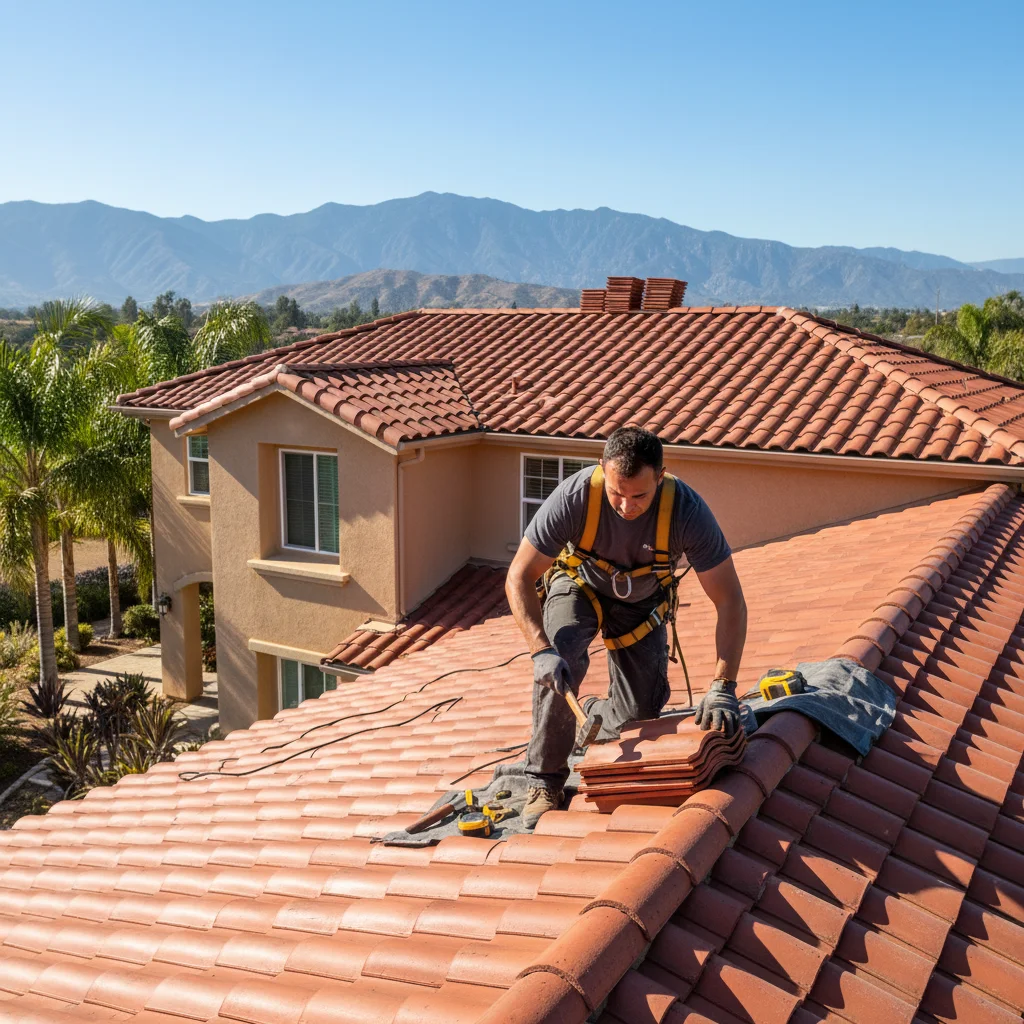
Concrete tile is common on larger Bonita Verde and Sweetwater Valley parcels. The tile is a sun shield and a water diverter. It is not the waterproof layer. What fails is the underlayment. Older felt breaks down under heat cycling. Modern synthetics last longer, but we will not invent a 40-50 year promise. If the tile roof has never had a lift-and-relay, the underlayment is the inspection question, not the color of the field.
Asphalt shingle shows more on smaller-format Bonita Highlands and west-side houses. South Bay marine layer is milder than El Cajon heat, but salt-influenced air and daily cycling still wear granules. Confirm remaining life on the roof, not on the wrapper. Related: shingle granule loss.
The third profile is older barrel on custom Sweetwater Valley houses. Discontinued profiles often come from salvage. Ask the C-39 which yards they actually use.
The Sweetwater Valley equestrian factor
This is what makes Bonita different from the Chula Vista grid next door. A share of parcels are equestrian: house plus barns, stables, equipment buildings, tack rooms. When that property needs roof work, ask whether the quote is the residence only or the whole site.
Mobilizing crew and material to a large lot costs real money either way. Doing house and outbuildings in one mobilization is often cheaper per square than splitting years apart. We will not invent a 20-30 percent savings. Ask for both scopes in writing.
A common mix is concrete tile on the residence (look and HOA, if any) and standing-seam metal on barns and outbuildings. Metal sheds water and takes wind. Fire classification is a listed-assembly question for the AHJ and insurer, not a countywide Class A fact. Outbuildings are not tract houses. Framing, access, and fastening differ. A residential-only crew that prices barns like a 1,600-square-foot ranch is the wrong book.
If you are hiring for an equestrian property, ask for recent Sweetwater Valley full-property addresses, not only Chula Vista tract photos.
What roof problems look like in Bonita
Slow tile leaks from failed underlayment. Water in the attic or on a ceiling after the first hard rain. Tile looks fine from the street. Water has been running under the field and found a low spot or a pipe. That usually points to lift-and-relay, not a dab of mastic. More: common causes of tile roof leaks and tile underlayment failure signs.
Cracked or slipped tile after wind. Santa Ana events still lift ridge and hip pieces in South Bay. Scope is matching tile, proper fasteners, flashing check. We will not invent a per-tile total.
Pipe boot and flashing failures. Rubber gaskets crack in UV. Long-life boots are a common upgrade during relay or replacement. Look at the actual boot. We will not invent a 12-15 year clock or a per-boot price.
Gutter and fascia rot. Older drip edge lets water curl back. Replace rotted fascia, install drip edge, rehang gutters. Extent varies. Get it as a line item.
How to read 2026 Bonita roofing bids
Roofs here often run larger than tight Chula Vista master-plan lots. That scales material and labor. It does not license a blog to print a typical-home total. We will not print repair, boot, lift-and-relay, new tile, shingle, or equestrian-package ranges.
Ask every bidder to separate:
- Tile repair of slipped or cracked pieces versus a leak that is really failed underlayment
- Pipe boots as their own line
- Tile lift-and-relay versus new tile
- Architectural shingle if that is the covering
- Outbuildings as their own assemblies, not a copied residential square-foot rate
Nearby comps for method, still not a Bonita price list: new roof cost 2026 and Chula Vista cost guide.
Bonita is unincorporated. Do not apply City of San Diego Information Bulletin 123 as if this were Scripps Ranch. Ask the County of San Diego building department (or whichever AHJ is on the parcel) what this scope needs.
HOA, fire zone, and insurance
HOA architectural review applies on some newer master-plan pockets. It is often lighter than Otay Ranch, EastLake, or Rolling Hills Ranch in Chula Vista. Sweetwater Valley equestrian ground and much of the older Highlands inventory may have no association at all. If you are not sure, read the CC&Rs before you sign a visible roof contract. Neighbor silence is not a waiver.
Fire-zone questions concentrate on the eastern edges toward unincorporated backcountry. The California Building Standards Commission publishes California Building Code Chapter 7A for wildland-urban interface construction. Read the current live text. Confirm with the County AHJ, OSFM, and the insurer whether this parcel is in a designated area and what covering that path requires. Do not treat Class A as a countywide fact or Chapter 7A as automatic. Ember-resistant vents and noncombustible eaves are parcel calls. Central and western Bonita may sit off a high-risk map and still face carrier paperwork at renewal. Ask. Age and material pressure from carriers: insurance non-renewal and roof age.
How to vet a Bonita roofer
Verify the C-39. Active license, name matching the contract: CSLB.
Ask about Bonita and Sweetwater Valley specifically. A downtown or tight-lot Chula Vista book may not know equestrian staging or discontinued barrel. Ask for recent 91902 addresses.
Get scope and assembly in writing. Manufacturer and product line, underlayment, flashing, warranty the roofer and manufacturer offer, timeline. A one-line “new roof” number is not enough to compare.
Watch door-knockers after wind events. Storm-chasers show up in South Bay. Verify the license. Get a second bid. Roofing contractor red flags.
Frequently asked questions
How much does a Bonita tile lift-and-relay cost?
It depends on squares, valleys, broken or discontinued tile, trees, and whether barns are in the same mobilization. We will not invent a typical total. Get a diagnostic inspection first.
Do I need HOA approval in Bonita?
Only if your CC&Rs say so. Many older and equestrian parcels do not. Some newer pockets do. Read the documents. An inspection is not construction. Review starts when visible work is scheduled.
Who issues the permit?
Usually the County for unincorporated Bonita. Confirm the parcel. HOA letters, if any, are not permits.
How do I get an estimate in Bonita?
Call (760) 750-5557 or request a quote. We match you with a licensed independent roofer. That person inspects and writes the estimate. Top Pro Roofing SD does not perform the work.
Get connected
We match Bonita homeowners with licensed independent roofers who know Sweetwater Valley lots, older tile profiles, CC&R packets where they apply, and fire-edge assembly questions on the east side. No obligation on the call.
Call (760) 750-5557 or request a quote.
Nearby: Bonita roofing service hub and Chula Vista roofing guide.