Chula Vista is two roofing conversations on one city map. West of I-805, older tract and craftsman stock mixes composition shingle, aging barrel tile, and low-slope additions. East through Otay Ranch, EastLake, Rancho del Rey, and Rolling Hills Ranch, production concrete tile and HOA color lists dominate. Repair patterns follow that split, not a single “Chula Vista roof” spec.
Top Pro Roofing SD is a referral marketplace. We connect South Bay homeowners with independent CSLB C-39 roofers. We do not install roofs, pull City of Chula Vista permits, or publish a 2026 city price card. Call (760) 750-5557. Line-item bidding lives on the 2026 Chula Vista roof replacement cost guide. Neighborhood routing: Chula Vista roofing.
West Chula Vista: aging shingle, salt, and additions
The western half (Old Town, Castle Park, the Third Avenue corridor, bayfront-adjacent blocks, and most of 91910 and 91911) is older housing. Composition shingle is common on single-story tract. Older barrel tile shows up on Spanish-style streets. Mid-century ranches often carry a flat-roof porch or addition that is a separate assembly from the main slope.
The usual west-side replacement conversation is composition shingle after tear-off to deck, with deck sheets called out as an allowance. Ask for a named architectural product, underlayment, flashing metal, and fastener type. Do not treat “Class 4” or “insurance discount” as a guarantee. Those are carrier and product-program questions, not something this referral brand can enroll.
Salt influence near the bay. Imperial Beach sits south. The bay sits west. Marine air is hard on galvanized flashing and cheap fasteners. On the closest-to-coast blocks, ask the matched roofer whether stainless or copper flashing and stainless fasteners belong in the written spec. Pattern, not a ZIP surcharge: coastal roof salt damage.
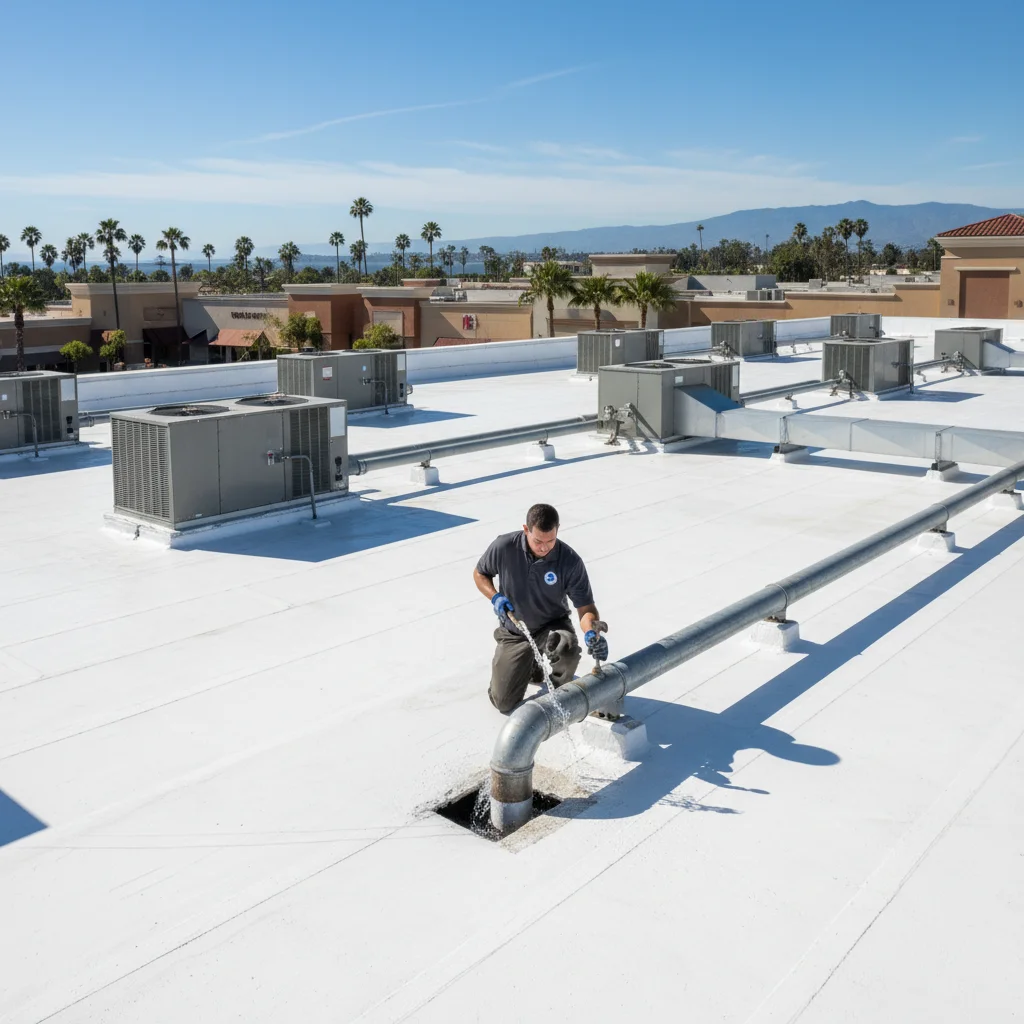
Flat additions need their own line. Many west-side homes have tar-and-gravel or aging modified bitumen on an addition. Ponding, blisters, and slow leaks are membrane problems. They do not get solved by a shingle quote on the main house. See TPO.
Older barrel tile is not a patch-and-forget. Tiles slip. Felt under them fails. The next rain finds the open path. Ask whether the bid is spot reset, lift-and-relay, or new tile. Those are different scopes.
East Chula Vista: master-plan tile and underlayment
Otay Ranch, EastLake, Rancho del Rey, Rolling Hills Ranch, Sunbow, and later Eastlake Greens phases (mostly 91913, 91914, 91915) were built as coordinated plans. Concrete tile is the typical single-family field. Low-slope membrane is common on multi-family.
On the earliest EastLake and Rancho del Rey phases, the tile can still salvage while the first-generation underlayment is the leak path. That is the tile lift-and-relay conversation: field tile salvaged, new high-temp synthetic underlayment, flashing at penetrations, tile reset. Newer Otay Ranch phases are often still in repair territory: pipe boots, ridge tile, valleys, storm damage.
HOA architectural review applies across those east-side communities. Each association has its own approved profiles and colors. Visible roof work needs committee paper before the job starts. This brand does not file HOA packets. Ask the matched C-39 who submits, what samples they need, and what the association’s current clock is. We will not invent a two-to-four-week approval.

The fire-zone edge
Outer EastLake and Rolling Hills Ranch, where the grid meets unincorporated backcountry, can sit in CAL FIRE or SDG&E high-risk mapping. Class A assemblies, ember-resistant attic vents, and eave detailing are permit and insurer questions on those parcels. Confirm the parcel on the CAL FIRE FHSZ viewer and with the City, not from a blog map.
Interior Otay Ranch, EastLake, Rancho del Rey, and most of the west-side grid are a different mapping conversation. Class A products still show up on many replacement specs because carriers and product lines push that way. Confirm what your carrier and the permit actually require. Do not treat Class A as a Chula Vista-wide fact. Materials overview: wildfire-resistant roofing.
Insurance claims in Chula Vista
South Bay storm and wind events, mature west-side trees, and a large rental inventory (Naval Base San Diego nearby) mean claim-driven work shows up here. This brand does not adjust claims, speak for carriers, or promise a payout.
Santa Ana wind. Lifted shingles, ridge caps, slipped tile, and edge metal are common damage notes. Ask the inspector for photos, a written scope, and what they observed versus what they guessed.
Tree limbs. West-side blocks have mature trees. Document the cause for the carrier. Repair vs replace still follows the assembly, not the claim file. Guides: roof insurance claim California and insurance non-renewal and roof age.
What west-side vs east-side calls actually look like
West: missing or lifted shingles after wind, exposed underlayment patches, fascia rot at drip edge, ponding on additions, pipe boots that failed before the field shingle.
East: slow leaks under first-generation tile, slipped or cracked tiles, loose ridge, skylight curb flashing on early EastLake and Rancho del Rey phases.
Both: chimney flashing, Santa Ana damage, and limb hits. Decision frame: roof repair vs replace.
We will not invent west-side shingle package totals, east-side lift-and-relay totals, multi-family TPO invoices, or a “typical Chula Vista repair” dollar band. Those numbers belong on a measured bid for this address.
How to vet a Chula Vista roofer
C-39. Active license, name matching the contract, at the CSLB license check. This marketplace is not the licensee.
Ask about your zone. A west-side shingle crew may not have tile handling or Otay Ranch HOA packets. An east-side tile crew may not have deck-repair volume on a 60-year-old 91910 home. Ask for recent addresses in your ZIP and stock type.
Assembly in writing. Manufacturer and product line, underlayment, flashing metal, fasteners, who pulls the City permit, who files the HOA, manufacturer vs workmanship papers. A one-line quote is not a scope.
Storm chasers. After Santa Ana events, out-of-area crews knock doors. Verify the C-39. Get a second written scope. Red flags: roofing contractor red flags.
When to call us
If you need a licensed independent roofer who can inspect a west-side shingle, an east-side HOA tile, or a mixed addition in Chula Vista, we make the match. We do not quote the job. Call (760) 750-5557 or request a quote.